








Introduction
The riverbank collapse iford playing fields was more than a patch of land slipping into the River Stour. It interrupted access to a well-used public space, raised immediate safety concerns, and highlighted how natural erosion can affect places that communities depend on every day. Incidents like this deserve careful attention because they remind local authorities and residents alike that riverbanks are constantly changing, even when those changes are not immediately visible.
Understanding What Happened at Iford Playing Fields
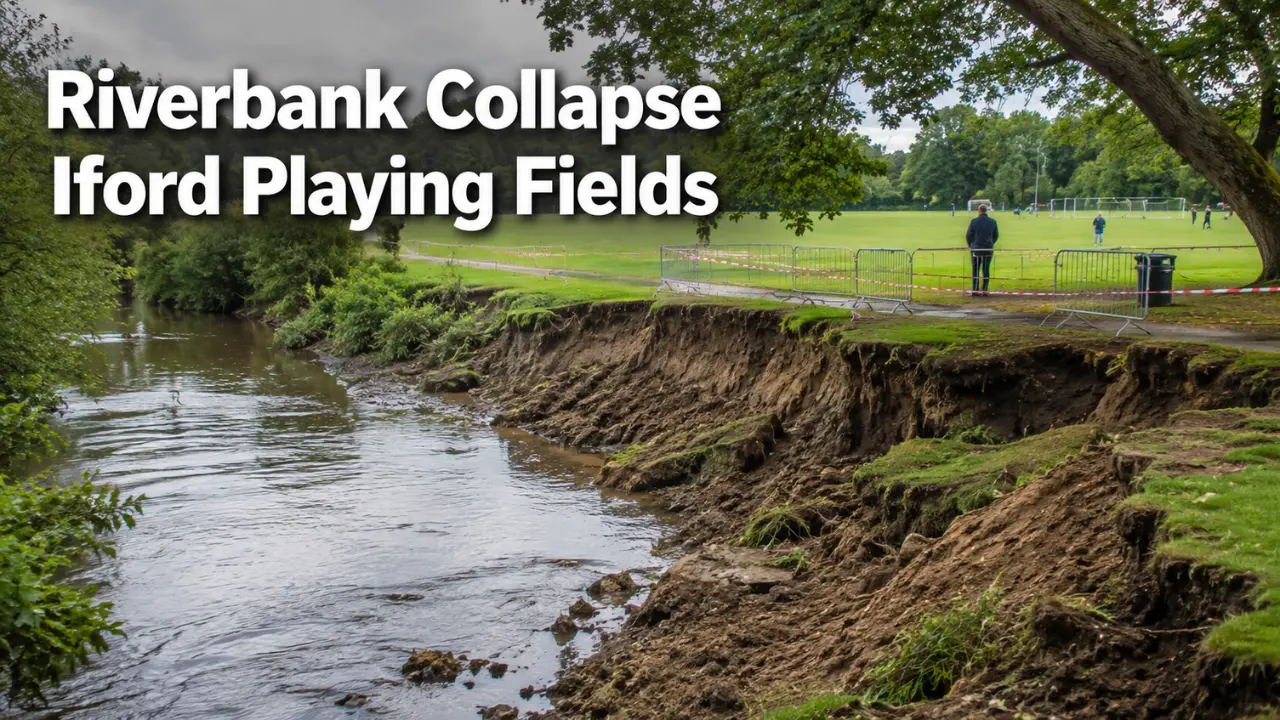
The riverbank collapse iford playing fields occurred along the edge of the River Stour, where a section of the bank became unstable and collapsed. The affected area was close to a public recreation space used for walking, sports, and outdoor activities.
Following the collapse, the damaged section created concerns about public safety because unstable ground can continue moving even after the initial failure. Areas near collapsed riverbanks often require temporary barriers or restricted access until inspections confirm that the remaining ground is stable.
While the visible damage attracted attention, the collapse itself was the result of natural processes that develop gradually over time rather than a sudden isolated event.
Why Riverbanks Collapse
Riverbanks rarely fail without warning from nature. Instead, they weaken through continuous erosion, changing water levels, and weather conditions.
Constant Water Movement
Flowing rivers slowly remove soil from the base of their banks. This process, known as undercutting, creates empty space beneath the upper layers of soil. Eventually, the unsupported section can no longer carry its own weight and gives way.
The riverbank collapse iford playing fields reflects the kind of failure that can occur when erosion gradually weakens the river’s edge over an extended period.
Heavy Rainfall and Saturated Ground
Rainfall plays a major role in riverbank stability.
When large amounts of water soak into the ground, the soil becomes heavier while losing much of its natural strength. If erosion has already weakened the base of the bank, saturated soil increases the likelihood of collapse.
This combination of flowing water and prolonged wet conditions is one of the most common reasons riverbanks fail.
Natural Aging of Riverbanks
Every river constantly reshapes its surroundings.
Even healthy river systems naturally erode one section while depositing sediment elsewhere. This ongoing cycle means riverbanks require regular monitoring, particularly where public spaces are located close to the water.
Why Iford Playing Fields Is an Important Location
The significance of the riverbank collapse iford playing fields goes beyond environmental damage.
Iford Playing Fields serves as a valuable public recreation area where residents enjoy outdoor activities throughout the year. Open spaces beside rivers provide walking routes, sports facilities, and opportunities for families to spend time outdoors.
When part of a riverbank becomes unsafe, the impact extends well beyond the collapsed ground. Public access may be limited, sporting activities can be disrupted, and visitors often need to avoid sections of the area until repairs are completed.
That makes riverbank stability an important issue for the wider community rather than simply an environmental concern.
Public Safety Must Remain the First Priority
After the riverbank collapse iford playing fields, keeping visitors away from unstable ground became the immediate concern.
Freshly collapsed riverbanks are often more dangerous than they appear. Cracks may extend behind the visible edge, creating hidden weak points beneath grass and vegetation.
For this reason, temporary fencing and warning signs are standard safety measures around unstable riverbanks. Although they may inconvenience visitors, they reduce the risk of further accidents while engineers assess the damaged area.
Ignoring restricted areas is never worth the risk because additional movement can occur without warning.
Environmental Effects of the Collapse
A riverbank collapse changes more than the appearance of the landscape.
When soil falls into a river, suspended sediment increases. This can temporarily reduce water clarity and alter conditions for aquatic plants and fish.
Vegetation growing along the riverbank may also be lost during the collapse. These plants normally help stabilize soil through their root systems while providing habitat for birds, insects, and other wildlife.
Although rivers naturally recover over time, restoring damaged vegetation often forms an important part of long-term recovery.
How Riverbanks Are Repaired
Repairing a damaged riverbank involves much more than replacing lost soil.
Engineering Solutions
Specialists first investigate why the collapse occurred.
If erosion remains active beneath the waterline, rebuilding the surface without addressing the underlying cause is unlikely to succeed.
Depending on site conditions, engineers may strengthen the riverbank using stone protection, retaining structures, or other stabilization methods designed to resist future erosion.
Restoring Natural Vegetation
Plants play a valuable role in long-term stability.
Native grasses, shrubs, and riverside vegetation develop root systems that help bind soil together while reducing surface erosion caused by rainfall.
Combining engineering work with carefully planned planting usually delivers stronger long-term results than relying on hard construction alone.
Improving Drainage
Poor drainage allows water to build inside riverbanks.
Reducing excess groundwater helps decrease pressure within the soil, making future movement less likely.
Lessons for Other Riverside Communities
The riverbank collapse iford playing fields offers important lessons for communities located beside rivers.
Waiting until visible damage appears is rarely the best approach.
Routine inspections can identify warning signs such as:
- Small cracks near the bank edge
- Leaning trees
- Exposed roots
- Minor soil movement
- Sections of sinking ground
Finding these problems early allows repairs before larger failures develop.
Preventive maintenance usually costs far less than emergency reconstruction after a major collapse.
Climate and Changing Weather Patterns
Weather continues to influence riverbank stability across many parts of the United Kingdom.
Periods of intense rainfall increase river flows while saturating surrounding ground. Higher water levels place greater pressure on already weakened riverbanks, especially in areas where erosion has been occurring for years.
Dry periods can also contribute by creating cracks within the soil, allowing rainwater to penetrate deeper once wetter conditions return.
These natural cycles make continuous monitoring increasingly important for riverside parks and recreation areas.
Protecting Public Spaces Near Rivers
Public green spaces located beside rivers require ongoing management rather than occasional repairs.
Regular inspections, vegetation maintenance, erosion monitoring, and drainage improvements all help reduce future risks.
Community awareness also plays a role. Residents who notice new cracks, fresh erosion, leaning trees, or sudden changes along riverbanks should report them promptly. Early reporting allows specialists to investigate before conditions become more serious.
The riverbank collapse iford playing fields demonstrates why maintaining riverside environments should remain an ongoing responsibility rather than a reaction after visible damage has already occurred.
Looking Beyond the Immediate Damage
The riverbank collapse iford playing fields is a reminder that natural landscapes are never completely static.
Rivers continuously reshape their banks through erosion, changing water levels, and seasonal weather. Public spaces built alongside these waterways require regular observation to ensure they remain safe for everyday use.
Strong riverbank management depends on combining engineering expertise with environmental care. Protecting wildlife habitats, preserving public access, and reducing future erosion all contribute to healthier riverside spaces that benefit both local communities and the natural environment.
Conclusion
The riverbank collapse iford playing fields highlights the importance of treating riverbank stability as a long-term responsibility instead of a one-time repair project. Public safety, environmental protection, and responsible maintenance all depend on recognising early warning signs before major failures occur. Communities benefit most when riverside spaces are monitored consistently, repaired carefully, and managed with an understanding that rivers will always continue shaping the landscape around them.
Frequently Asked Questions
1. What caused the riverbank collapse iford playing fields?
The available information indicates that the collapse occurred after the riverbank became unstable. Riverbank failures are commonly associated with long-term erosion, water undercutting, saturated soil, and natural ground movement. However, unless confirmed by an official investigation, the precise cause for this specific incident has not been publicly established.
2. Is the affected area safe to visit?
Visitors should always follow any local safety notices, barriers, or temporary restrictions. Riverbanks can remain unstable after an initial collapse until professional inspections determine that the area is safe.
3. Can riverbank erosion be completely prevented?
No. Erosion is a natural process in river systems. The goal of riverbank management is to reduce risk through monitoring, maintenance, vegetation, drainage improvements, and suitable engineering where necessary.
4. Why is vegetation important for riverbank stability?
Plants help hold soil together through their root systems. Healthy riverside vegetation also reduces surface erosion and supports wildlife that depends on riverbank habitats.
5. What is the biggest lesson from the riverbank collapse iford playing fields?
The most important lesson is that early monitoring and preventive maintenance are far more effective than waiting until a riverbank fails. Regular inspections help identify developing problems before they become serious safety hazards.
Read More: Inflatom: Intelligent Digital Systems, Business Applications and Future Potential