









Introduction
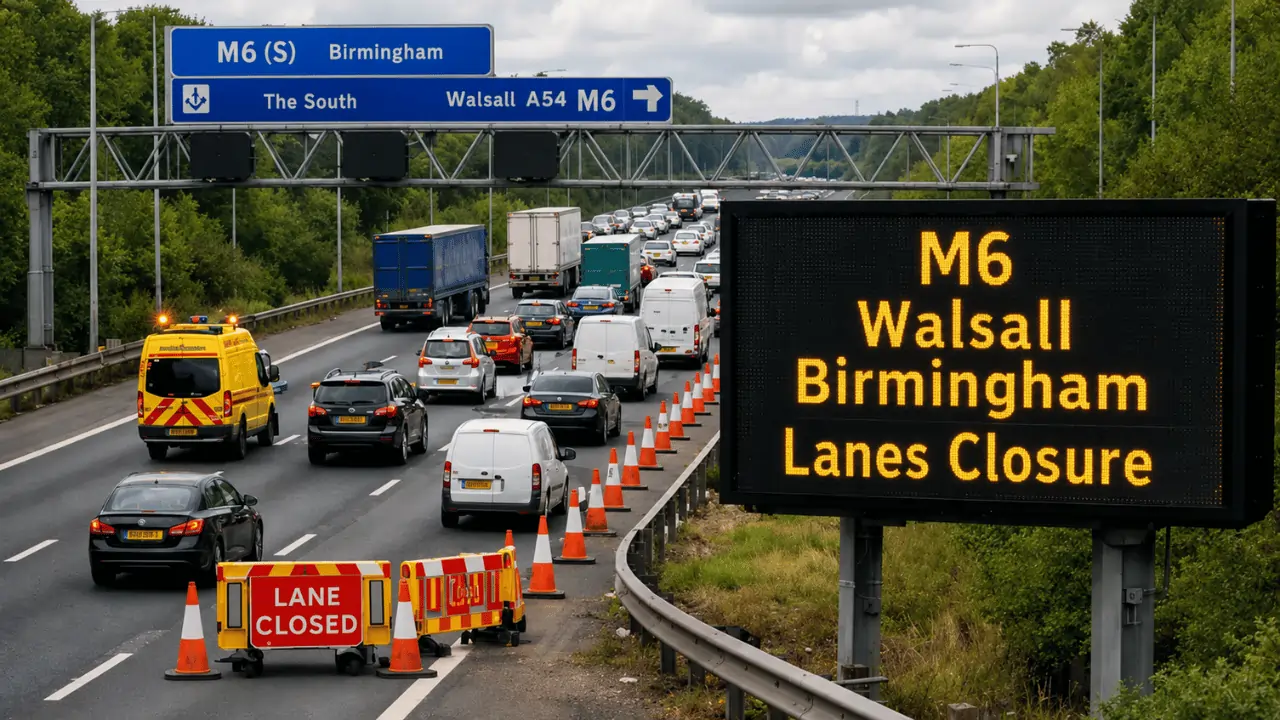
Anyone who regularly drives between Walsall and Birmingham knows that a single lane restriction can quickly turn into a frustrating journey. The latest m6 walsall birmingham lanes closure has once again highlighted how sensitive this stretch of motorway is to roadworks and traffic management. A delay of just a few minutes at one junction can spread across the motorway, affecting commuters, freight operators, local businesses, and weekend travellers alike. Planning ahead has become far more effective than hoping the traffic will clear by itself.
Why this section of the M6 attracts regular lane closures
The M6 through the West Midlands is among the busiest motorway corridors in England. It carries thousands of cars, vans, coaches, and heavy goods vehicles every day, making regular maintenance essential to keep traffic moving safely.
Projects often include resurfacing worn carriageways, repairing safety barriers, upgrading drainage systems, maintaining bridges, replacing road markings, and improving motorway technology. Because shutting the motorway completely would create even greater disruption, engineers frequently work with partial lane restrictions during quieter hours.
That is why the m6 walsall birmingham lanes closure often appears as part of planned maintenance rather than an emergency response.
The junctions most likely to experience delays
Traffic conditions can change quickly, but the busiest pressure points are usually found around Junctions 6 to 10.
Junction 6
This junction connects directly with Birmingham and handles significant commuter traffic. Congestion builds rapidly whenever lane restrictions reduce available road space.
Junction 7
Drivers travelling between Birmingham and Walsall regularly pass through this area. Roadworks here often slow vehicles before they even reach the work zone.
Junctions 8, 9 and 10
These junctions serve industrial estates, commercial centres, and freight routes. When the m6 walsall birmingham lanes closure affects this section, delays can extend well beyond the motorway itself.
Planned maintenance is better than emergency repairs
No driver enjoys sitting in traffic, but scheduled engineering work is usually the better outcome. Preventive maintenance keeps the motorway in safer condition and reduces the chance of major structural failures that would require lengthy closures.
Engineers typically schedule overnight work whenever possible because traffic volumes are lower. Even so, projects lasting several nights or weekends can still influence daytime journeys if reduced speed limits or temporary traffic management remain in place.
Ignoring routine maintenance would eventually create larger repairs, higher costs, and much longer disruption.
How lane closures affect nearby roads
The impact does not stop at the motorway.
When drivers leave the M6 to avoid delays, surrounding roads through Walsall, Great Barr, Aston, Perry Barr, and neighbouring communities begin carrying extra traffic. Local junctions become busier, roundabouts slow down, and travel times increase for residents who are not even using the motorway.
Public transport can also feel the effect. Buses operating close to motorway junctions may experience longer journey times when diverted traffic fills surrounding roads.
The m6 walsall birmingham lanes closure therefore influences a much wider area than the motorway alone.
Freight operators face greater pressure
Commercial transport companies depend on reliable journey times. A delayed lorry does not simply arrive late at one destination. The delay can affect warehouse schedules, delivery windows, retail stock replenishment, and return journeys.
Drivers operating under legal driving-hour limits have little flexibility when unexpected congestion develops. Even relatively short delays may require schedule adjustments later in the day.
Because of this, logistics companies monitor the m6 walsall birmingham lanes closure closely whenever maintenance work is announced.
Smarter journey planning saves more time than shortcuts
One of the biggest mistakes motorists make is assuming that every side road offers a quicker alternative.
Navigation apps often direct thousands of vehicles onto the same local routes. Those roads quickly become congested, removing any advantage they appeared to offer.
A better approach includes:
- Checking planned roadworks before leaving.
- Allowing extra travel time during peak periods.
- Travelling outside rush hour when possible.
- Following motorway information signs.
- Remaining patient instead of constantly changing lanes.
These simple decisions usually reduce stress more effectively than searching for unfamiliar shortcuts.
Driving safely through lane restrictions
Roadworks require concentration even when traffic is moving slowly.
Reduced speed limits are introduced to protect both drivers and road workers. Temporary lane markings can differ from permanent road markings, making it important to stay alert rather than relying on habit.
Drivers should avoid sudden lane changes close to the closure point. Early, controlled merging helps traffic flow more smoothly and lowers the chance of collisions.
Keeping a safe following distance also reduces unnecessary stop-start braking, which often creates longer queues than the original restriction.
Why delays sometimes continue after the work finishes
A common misunderstanding is that traffic immediately returns to normal once every lane reopens.
In reality, congestion takes time to clear. Vehicles delayed during the closure continue travelling through the network, creating heavy traffic for some time after restrictions end.
Morning commuters may also encounter residual delays if overnight engineering work finishes later than planned or if temporary traffic management is still being removed.
That is why reports concerning the m6 walsall birmingham lanes closure often remain relevant beyond the official completion time.
The economic impact reaches beyond the motorway
Traffic disruption affects far more than individual drivers.
Retail deliveries may arrive behind schedule.
Tradespeople lose valuable working hours while sitting in queues.
Service appointments must be rearranged.
Businesses depending on reliable transport spend more on fuel and staff time.
Even small delays repeated over several weeks can create noticeable financial pressure for companies operating across Birmingham and the wider West Midlands.
What regular commuters have learned
Drivers who use this route every day rarely depend on luck. They understand that preparation matters more than optimism.
Checking traffic conditions before departure has become part of the daily routine. Leaving home slightly earlier often proves more valuable than rushing later and hoping congestion disappears.
Experienced commuters also recognise that aggressive driving rarely saves meaningful time. Patience, consistent speed, and sensible planning usually produce a smoother journey.
The m6 walsall birmingham lanes closure serves as another reminder that motorway maintenance is an unavoidable part of keeping one of the country’s busiest transport corridors operating safely.
Looking ahead
Future maintenance projects are likely to continue because heavy traffic places constant pressure on the motorway. Short-term disruption is the price of maintaining a safer and more dependable road network.
Drivers who stay informed, respect temporary traffic management, and allow extra time are far better prepared than those who assume every journey will follow the usual routine. The motorway will always carry heavy traffic, but informed planning makes those busy journeys far easier to manage.
Frequently Asked Questions
1. Is the m6 walsall birmingham lanes closure always caused by accidents?
No. Most lane closures are planned in advance for maintenance, resurfacing, inspections, or infrastructure improvements, although emergency incidents can also require temporary restrictions.
2. Which drivers are affected the most?
Daily commuters, freight operators, business travellers, and anyone travelling during peak hours usually experience the greatest delays.
3. Are overnight roadworks completely finished before morning traffic begins?
Not always. Engineering work, equipment removal, or safety inspections can occasionally extend into the early morning period.
4. Should drivers leave the motorway to avoid queues?
Not automatically. Alternative roads often become congested when large numbers of motorists attempt the same diversion.
5. How can drivers reduce the impact of motorway lane closures?
Checking planned roadworks before travelling, allowing additional journey time, following motorway signs, and driving patiently are the most effective ways to minimise disruption.
Read More: Ordenari: What You Should Know Before Trusting Search Results