









Introduction
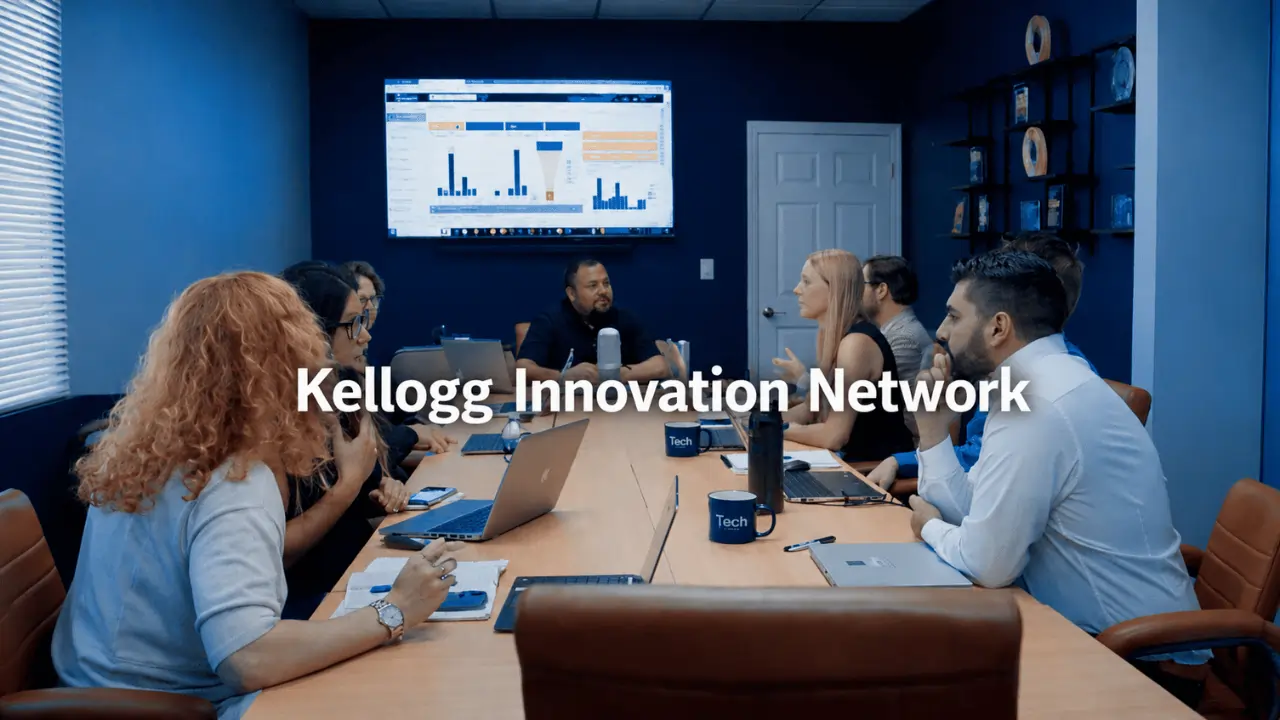
Great ideas rarely emerge from isolated teams. They grow when experienced people with different perspectives challenge assumptions, question familiar habits, and exchange practical knowledge. That is exactly why the kellogg innovation network continues to attract leaders who care about long-term progress instead of short-term headlines. Its strength is not built on flashy presentations or passing business trends. It comes from conversations that encourage better decisions, stronger leadership, and a broader understanding of the forces shaping business, technology, and society.
The Purpose Behind Meaningful Collaboration
The kellogg innovation network brings together executives, entrepreneurs, academics, policymakers, investors, nonprofit leaders, and innovators who share a common interest in preparing for the future. Instead of limiting discussions to one industry, the network encourages participants to learn from experiences that exist far outside their own fields.
This approach has practical value. A challenge facing healthcare may already have a solution developed in manufacturing. A lesson from higher education might improve corporate leadership. Public policy discussions can influence private-sector decision-making in unexpected ways. Those connections create opportunities that would rarely appear inside a single organization.
The network encourages people to think beyond immediate business pressures and examine the broader changes influencing organizations around the world.
How the Network Encourages Better Leadership
Leadership remains one of the strongest themes associated with the kellogg innovation network. While technology changes quickly, effective leadership depends on judgment, communication, adaptability, and trust.
Strong leaders understand that innovation is not achieved simply by approving larger budgets or investing in new software. Real progress happens when teams feel confident sharing ideas, questioning existing practices, and testing new approaches without unnecessary barriers.
The conversations within the network often encourage leaders to evaluate their own organizations from a different perspective. Instead of asking how to protect existing systems, they are encouraged to ask whether those systems still support future growth.
That change in thinking often becomes the first step toward meaningful improvement.
Why Cross-Industry Learning Matters
Organizations often compare themselves only with direct competitors. While that approach has value, it also limits creativity.
The kellogg innovation network promotes learning across completely different industries because valuable ideas rarely stay confined to one sector.
A retail company can learn from healthcare about customer trust.
A manufacturing business can adopt leadership practices from education.
Technology companies can gain insight from public administration about managing large-scale change.
These exchanges help leaders recognize opportunities that traditional business analysis might overlook.
Cross-industry collaboration also reduces the risk of repeating mistakes that another sector has already experienced and solved.
Preparing Organizations for Long-Term Change
Every organization faces uncertainty. Economic shifts, technological advances, changing customer expectations, workforce development, and environmental concerns all influence strategic decisions.
The kellogg innovation network encourages participants to prepare for change instead of reacting after disruption has already occurred.
Long-term planning requires more than forecasting revenue or monitoring competitors. It requires understanding how social, technological, economic, and organizational trends interact with one another.
Leaders who regularly explore these broader issues are often better prepared when unexpected challenges arise.
Digital Transformation Depends on Leadership
Digital transformation continues to influence almost every industry, yet technology alone does not guarantee success.
Organizations frequently invest in advanced systems while overlooking the people expected to use them.
The kellogg innovation network emphasizes that successful transformation depends on leadership, communication, employee engagement, and organizational culture.
New software can improve efficiency.
Artificial intelligence can support decision-making.
Data analytics can strengthen planning.
None of these investments reach their full value without leaders who create trust, encourage learning, and communicate a clear direction.
Technology supports progress, but people determine whether progress actually happens.
Innovation Requires Open Conversations
One of the defining characteristics of the kellogg innovation network is its commitment to open discussion.
Participants come from different industries, professional backgrounds, and geographic regions. That diversity creates conversations where ideas are tested instead of simply accepted.
Disagreement is treated as part of learning rather than something to avoid.
When experienced professionals openly challenge one another’s thinking, stronger solutions often emerge.
Innovation becomes more effective when different viewpoints are welcomed instead of filtered out.
Entrepreneurship Benefits from Broader Perspectives
Entrepreneurs often focus on speed, product development, customer acquisition, and funding.
Those priorities matter, but sustainable growth requires broader thinking.
The kellogg innovation network exposes entrepreneurs to experienced executives, researchers, investors, and policy leaders who have managed organizations through changing economic conditions and technological disruption.
This wider perspective helps founders identify risks before they become expensive problems.
It also encourages balanced decision-making by combining ambition with practical experience.
Businesses that continue learning from different sectors often remain more adaptable as markets evolve.
Sustainability Is Part of Smart Leadership
Sustainability has become an important part of business strategy rather than a separate initiative.
Customers, investors, employees, and communities increasingly expect organizations to balance financial success with responsible decision-making.
The kellogg innovation network supports conversations that explore environmental responsibility, ethical leadership, workforce development, and long-term organizational resilience.
Responsible innovation does not limit growth.
Instead, it encourages organizations to create value that remains meaningful over time.
Businesses that integrate sustainability into leadership decisions often strengthen both their reputation and their ability to compete in changing markets.
The Future of Work Demands Continuous Learning
Workplaces continue to change as automation, artificial intelligence, remote collaboration, and digital communication reshape daily operations.
The kellogg innovation network encourages leaders to prepare employees for continuous learning rather than assuming existing skills will remain sufficient.
Organizations that invest in professional development often respond more effectively to technological change.
Learning should not be viewed as an occasional training session.
It should become part of organizational culture.
Employees who continue developing their knowledge are better equipped to adapt as industries evolve.
Building Stronger Innovation Communities
Innovation is rarely the achievement of one individual.
Successful ideas usually emerge through collaboration, discussion, testing, and refinement.
The kellogg innovation network demonstrates the importance of building professional relationships that encourage knowledge sharing instead of information isolation.
Communities built on trust create opportunities for people to exchange experiences honestly.
That environment supports better decisions because participants gain access to perspectives they would never discover alone.
The strongest innovation ecosystems grow through consistent collaboration rather than occasional networking events.
Why Global Perspectives Matter
Business decisions increasingly influence markets far beyond national borders.
Economic conditions, supply chains, workforce mobility, digital technology, and sustainability all connect organizations across countries and industries.
The kellogg innovation network reflects this reality by encouraging discussions that include international viewpoints.
Leaders benefit from understanding how organizations in different regions approach similar challenges.
Learning from global experiences helps businesses adapt more effectively while avoiding mistakes that have already occurred elsewhere.
International collaboration also strengthens the exchange of practical ideas that can be adapted to different industries and local conditions.
Practical Lessons Organizations Can Apply
Organizations do not need unlimited resources to benefit from the ideas encouraged by the kellogg innovation network.
Leaders can begin by inviting different perspectives into strategic discussions.
Managers can encourage employees to question outdated processes.
Teams can study successful practices outside their own industries instead of focusing exclusively on direct competitors.
Companies can invest in leadership development alongside technology investments.
Small changes in organizational thinking often create greater long-term value than large investments made without clear direction.
Innovation becomes sustainable when curiosity becomes part of everyday decision-making.
Final Thoughts
Organizations that expect lasting success cannot afford to rely on familiar ideas forever. The greatest value of the kellogg innovation network lies in its commitment to thoughtful collaboration, informed leadership, and learning that crosses industry boundaries. Leaders who remain curious, welcome different perspectives, and prepare for long-term change place their organizations in a stronger position than those who simply react to the next business trend. Progress belongs to organizations that keep learning long after others become comfortable.
FAQs
1. What makes the Kellogg Innovation Network different from a typical business conference?
Its focus extends beyond presentations by encouraging ongoing dialogue among leaders from business, education, government, healthcare, technology, and nonprofit organizations, creating opportunities for deeper collaboration and practical learning.
2. Can small businesses benefit from the ideas associated with the Kellogg Innovation Network?
Yes. Small businesses can apply the same principles of collaboration, leadership development, continuous learning, and cross-industry thinking without requiring large budgets or global operations.
3. Why is cross-industry collaboration valuable for innovation?
Different industries often solve similar challenges in unique ways. Studying those approaches helps organizations discover practical solutions they may not find by looking only at direct competitors.
4. Does the Kellogg Innovation Network focus only on technology?
No. While technology is an important topic, discussions also emphasize leadership, organizational culture, sustainability, entrepreneurship, workforce development, and long-term strategic thinking.
5. What is the biggest takeaway for business leaders?
The most successful organizations build innovation through strong leadership, continuous learning, and meaningful collaboration instead of relying solely on new technology or short-term market trends.
Read More: Fedsolife: Stylish Everyday Jewelry, Quality, Materials & Smart Buying Guide